1827 or before
Bishop Museum Ethnology Collection

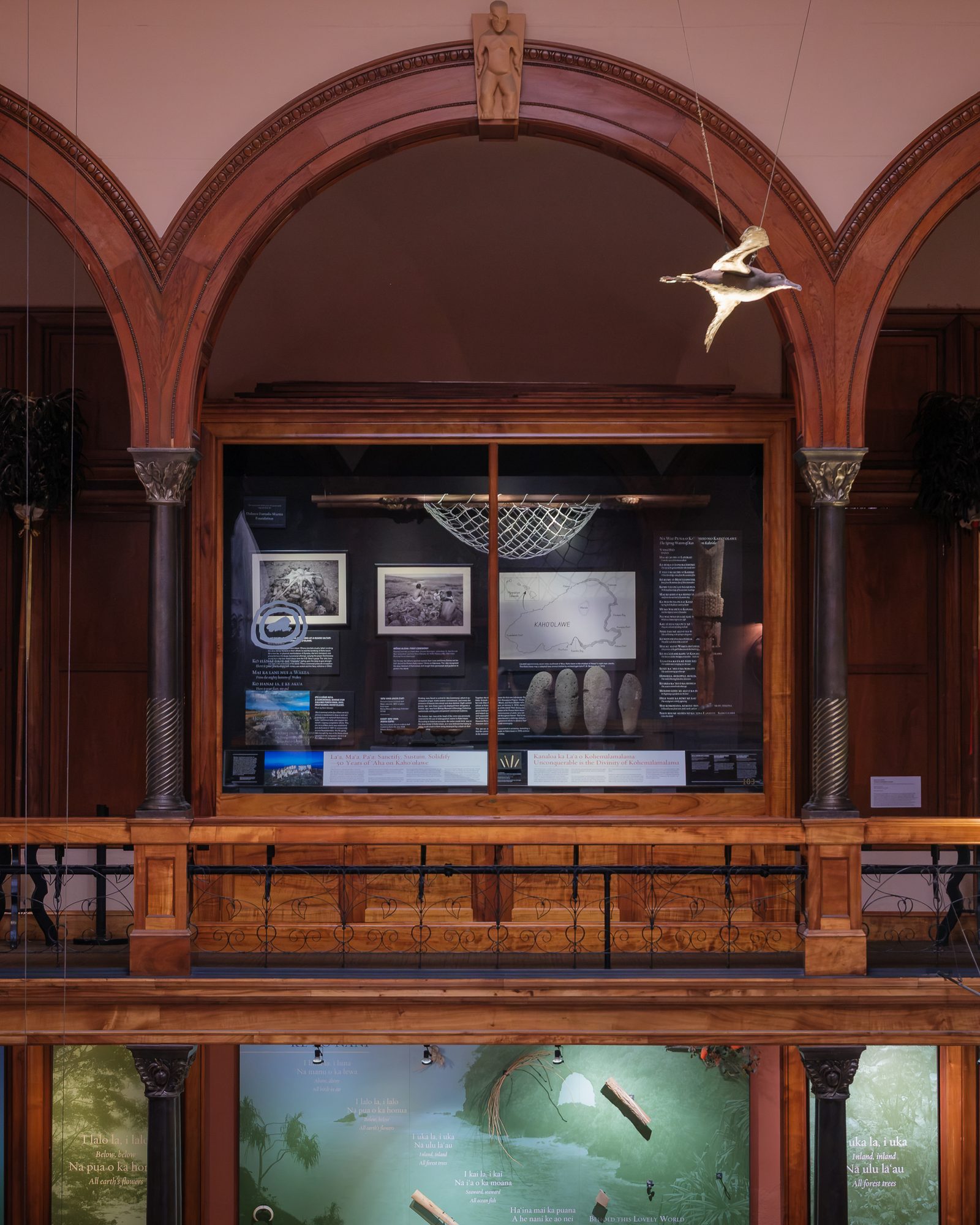
New Treasure Case installation on the third floor of Hawaiian Hall
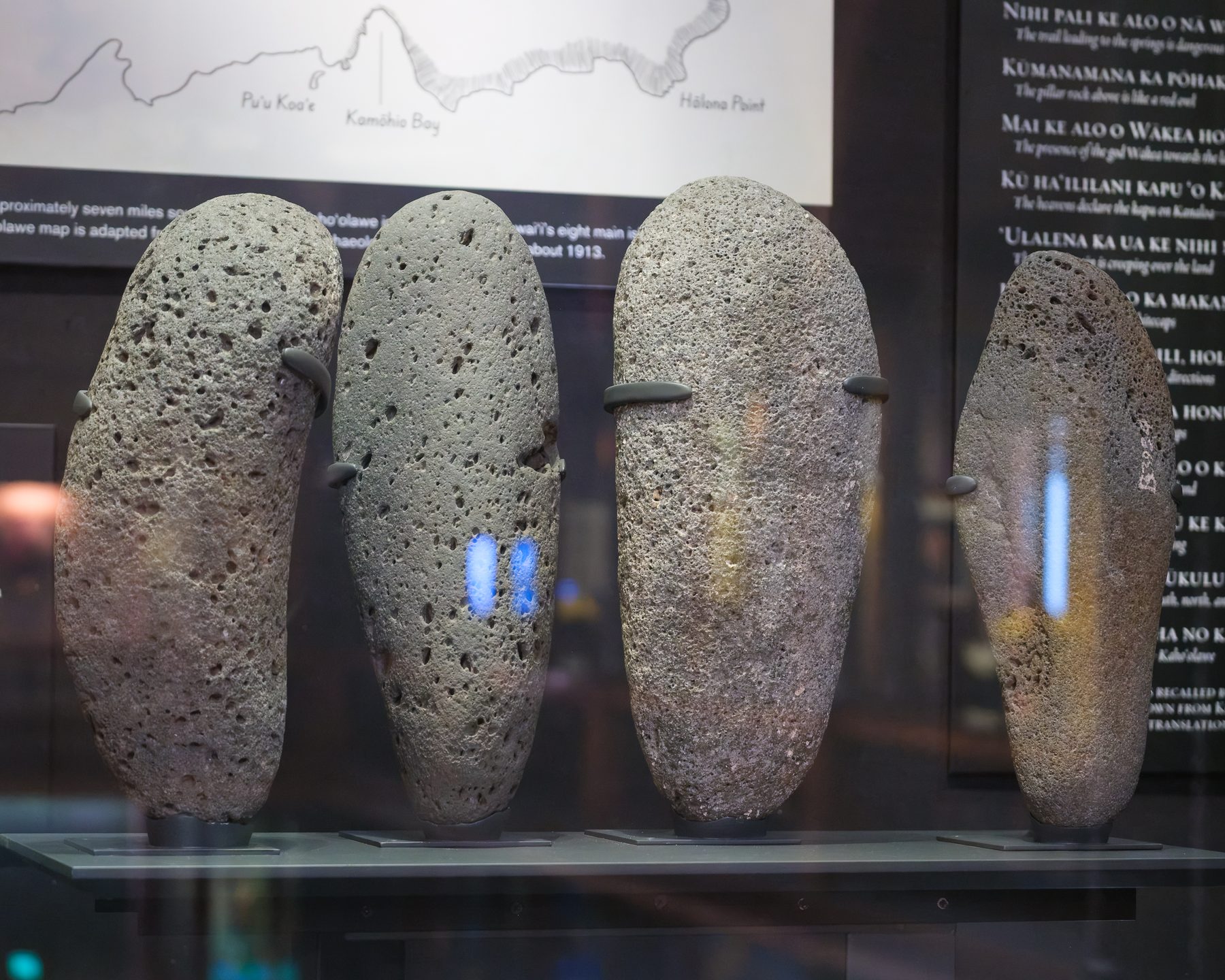
Unconquerable is the Divinity of Kohemālamalama
Kohemālamalama o Kanaloa is a traditional name for Kahoʻolawe. The title of the installation speaks to the sacredness of the island, its enduring relationship with Kanaloa, and the spiritual and cultural foundations that remained despite the profound damage Kahoʻolawe experienced through ranching, military use, bombing, and restricted Native Hawaiian access.
50th Anniversary of the Protect Kahoʻolawe ʻOhana
Kanaloa ka Laʻa o Kohemālamalama
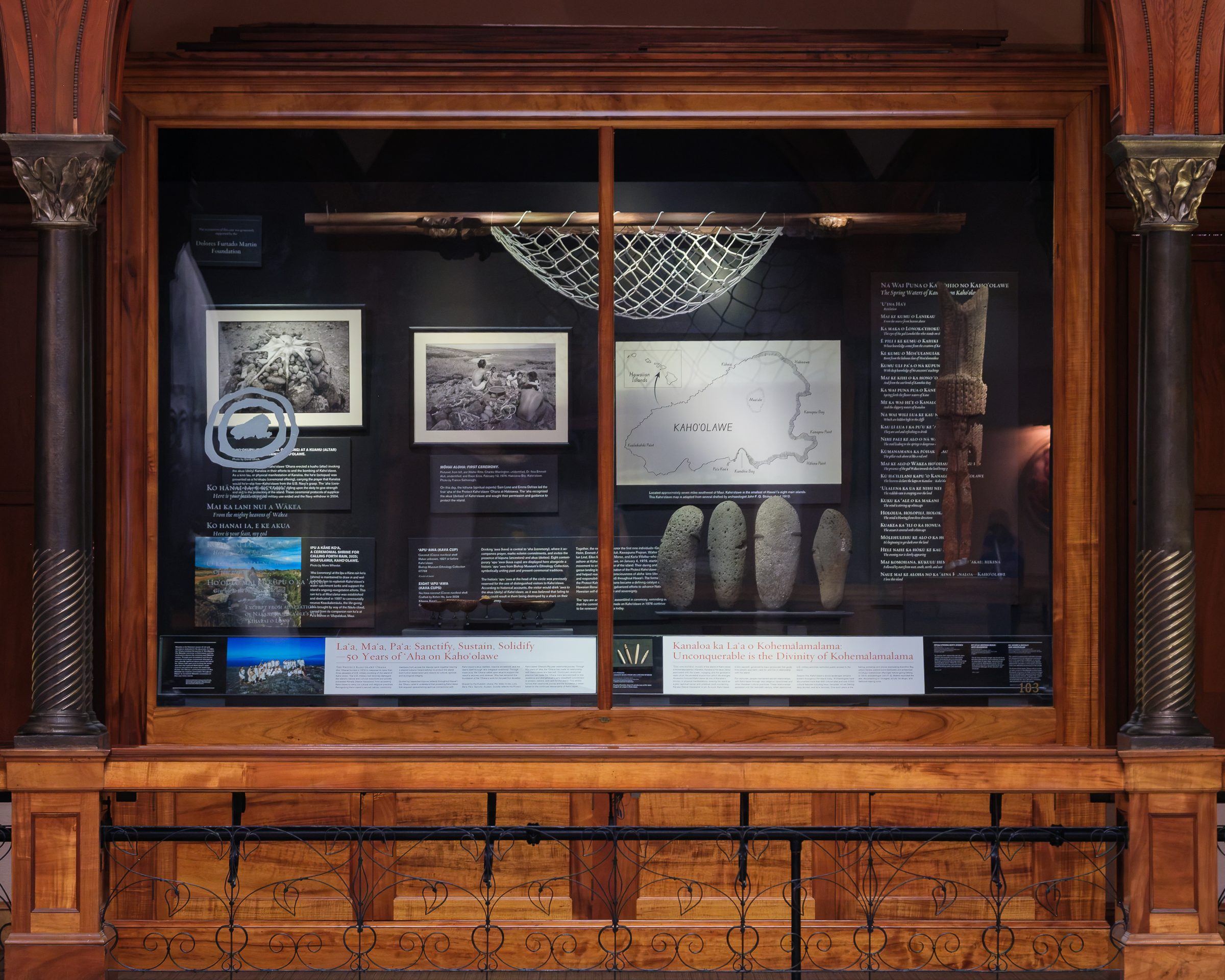
Co-curated by Pūlama Lima, Bishop Museum curator of Archaeology, and the Protect Kahoʻolawe ʻOhana, the installation examines the cultural and spiritual foundation of the movement and the central role that ʻaha and Hawaiian religious practice have held within the ʻOhana throughout its 50-year history.
(“ʻAha” has multiple meanings but in this context can be interpreted as “ceremony.”)
Kanaloa ka Laʻa o Kohemālamalama: Unconquerable is the Divinity of Kohemālamalama brings together historical objects and archival materials from Bishop Museum’s collections, with contemporary photographs and pieces from the Protect Kahoʻolawe ʻOhana.
01
02
Together, these materials allow visitors to see both continuity and the intentional development of ʻaha within the movement.
1827 or before
Bishop Museum Ethnology Collection
1913
Bishop Museum’s collections
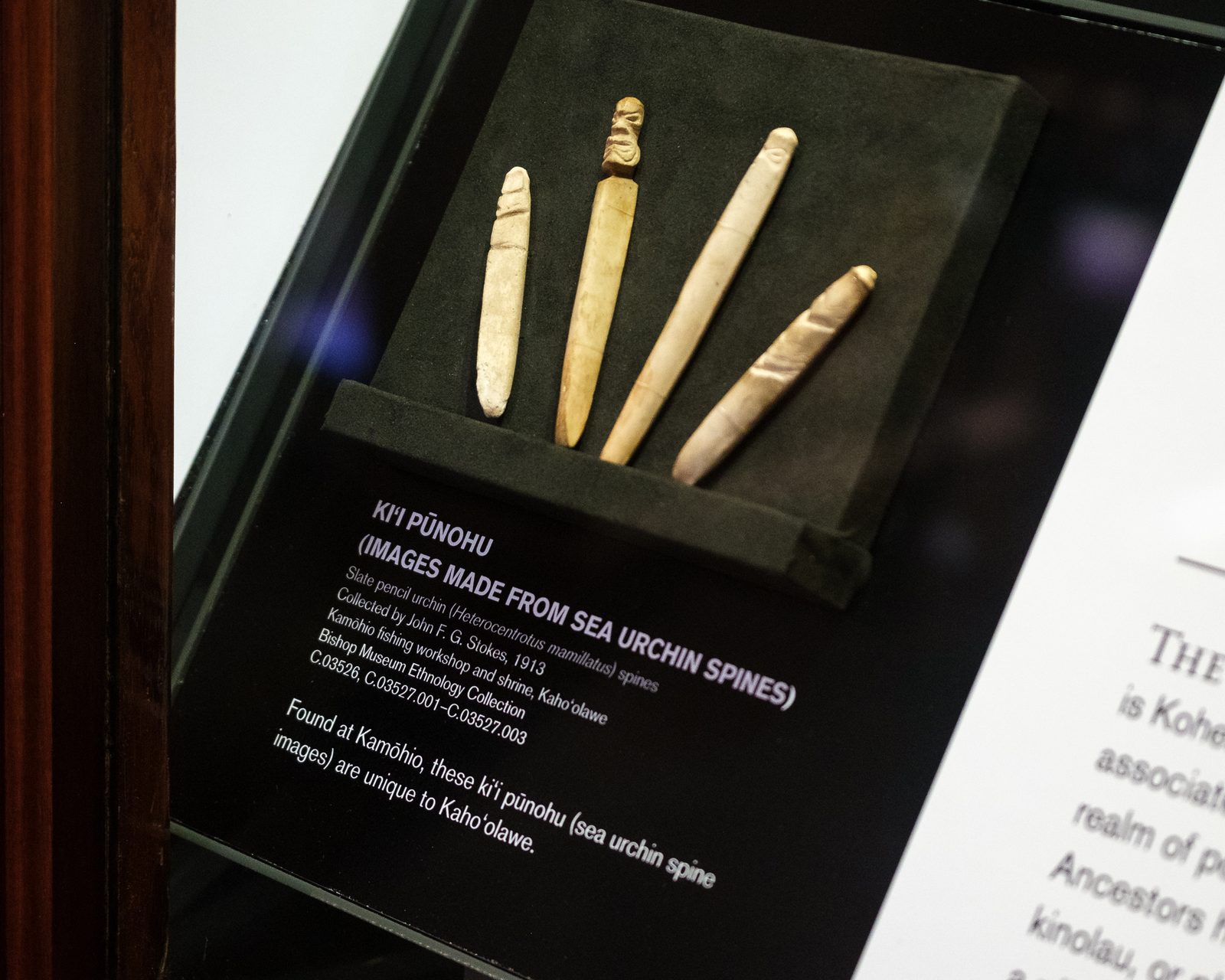
Many of the Museum’s collection items featured in the installation are associated with archaeologist John F. G. Stokes’ 1913 visits to Kahoʻolawe and his documentation of Kamōhio Bay.
1976
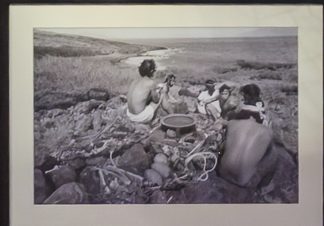
Protect Kahoʻolawe ʻOhana
Materials from the ʻOhana document how ʻaha became foundational to the movement beginning at Hakioawa in 1976, and how the ʻOhana continued to deepen and elevate these practices over the decades.
2026 June
Protect Kahoʻolawe ʻOhana
50 years
Kanaloa ka Laʻa o Kohemālamalama
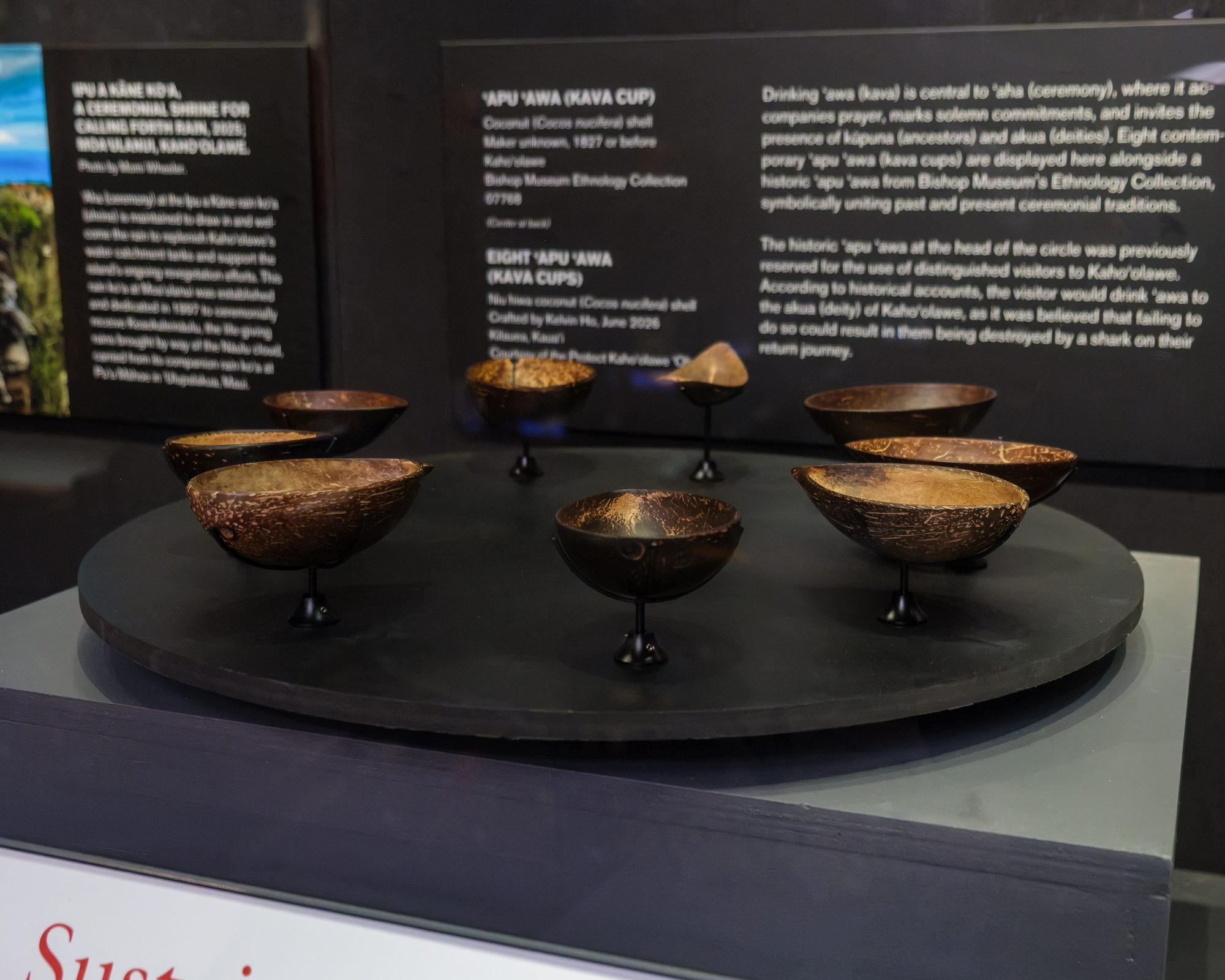
03
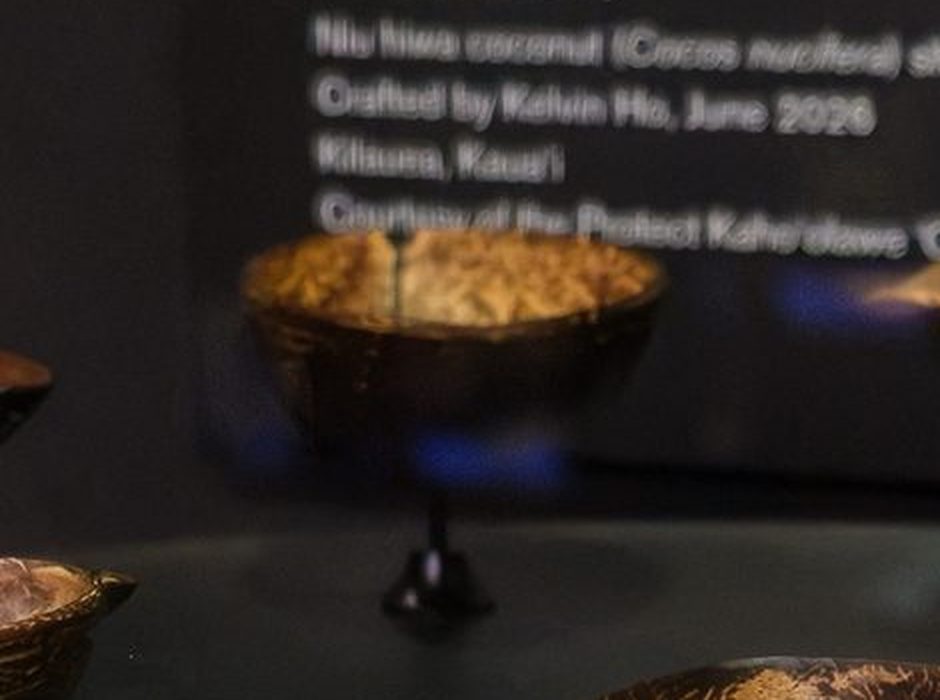
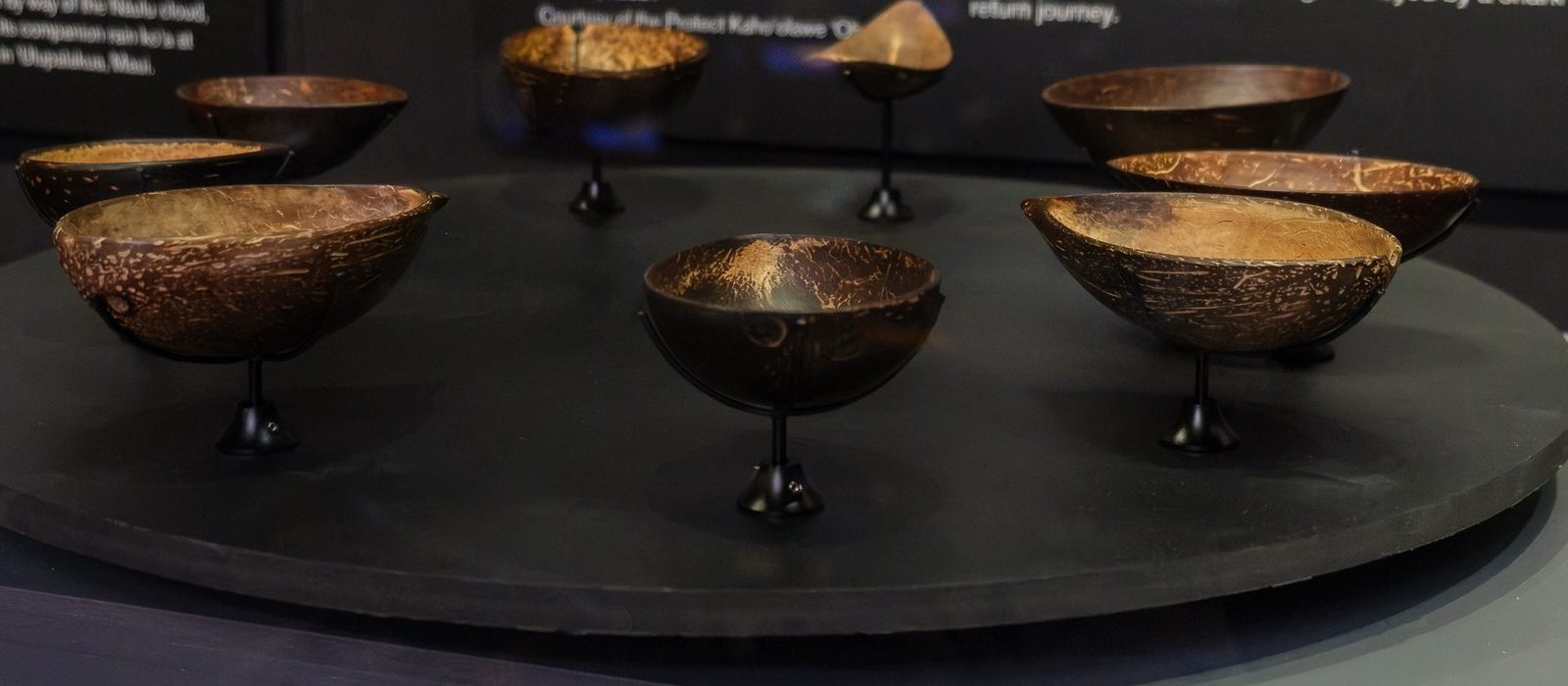
Drinking ʻawa (kava) is central to ʻaha (ceremony), where it accompanies prayer, marks solemn commitments, and invites the presence of kūpuna (ancestors) and akua (deities).
Eight contemporary ʻapu ʻawa (kava cups) are displayed here alongside a historic ʻapu ʻawa from Bishop Museum’s Ethnology Collection, symbolically uniting past and present ceremonial traditions.
The historic ʻapu ʻawa at the head of the circle was previously reserved for the use of distinguished visitors to Kahoʻolawe. According to historical accounts, the visitor would drink ʻawa to the akua (deity) of Kahoʻolawe, as it was believed that failing to do so could result in them being destroyed by a shark on their return journey.
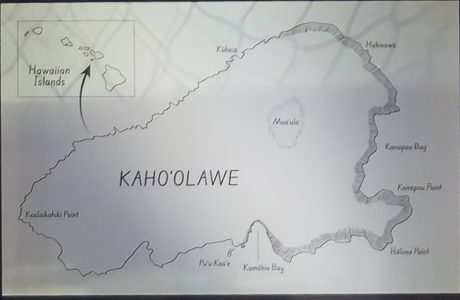
A historical map of Kahoʻolawe
04
Stokes’ documentation of Kamōhio recorded a place of ceremonial practice and preserved objects and information that help us better understand the longstanding relationships between Kānaka (man), akua, ʻāina (land), and the resources of Kahoʻolawe.
Materials from the ʻOhana document how ʻaha became foundational to the movement beginning at Hakioawa in 1976.
“We often remember Kahoʻolawe through the occupations, the bombing, and the political struggle to return the island, and those histories are incredibly important. But alongside that history is an equally important story of ʻaha, Hawaiian religious practice, and the conscious rebuilding and strengthening of relationships with akua, kūpuna (ancestors), and ʻāina.”
“For me, that continuity is one of the most meaningful parts of this story. The ʻOhana understood that returning to Kahoʻolawe also meant returning to practices and ways of understanding our place within the world that had sustained Hawaiians for generations. That consciousness shaped how they approached Kahoʻolawe and their kuleana (responsibility) to the island. I hope the installation helps people recognize the importance of that foundation and consider what it continues to offer us as a lāhui (people) today.”
Pūlama Lima · Bishop Museum curator of Archaeology
Visit
BishopMuseum.org“I hope visitors (to the Museum and the installation) leave with a deeper appreciation for the Protect Kahoʻolawe ʻOhana and for the cultural and spiritual foundation of the movement.”
Hawaiian Hall third floor Treasure Case
Runs through April 2027
Pūlama Lima, Bishop Museum curator of Archaeology, and the Protect Kahoʻolawe ʻOhana
Guests are encouraged to pre-plan their trip to #HawaiisMuseum with its free digital guide, available through Bloomberg Connects.